
"Central American alternatives"
200 article(s) found

Costa Rican Goddess Manor with clear and sour flavor planting market price of boutique coffee beans
After picking raw coffee beans, the seeds (that is, coffee beans) can be roasted only by peeling, pulp, seed film and sun exposure. Part of the process can be replaced by machines, and the speed of coffee production increases a lot. However, there is no machine to do coffee picking. Be sure to use artificial Costa Rican coffee made entirely of Arabica beans. Using water washing method, its style is bright.

History, culture and story allusions of sacred boutique beans in Las Haas Manor, Costa Rica
Professional barista exchanges please follow the coffee workshop (Wechat official account cafe_style) Costa Rica Las Haas Manor San boutique beans history and culture, stories and allusions La Lajas Manor Black Honey treatment Finca Las Lajas Black Honey ■ country: Costa Rica ■ production area: central Valley ■ altitude: 1300-1500 m ■ treatment: black honey

Costa Rica San Romano Estate Coffee Flavor Taste Characteristics Boutique Coffee Bean Introduction
The Supreme Court is the highest judicial body and consists of 22 judges elected for an eight-year term. At the end of the term, if there is no objection from two-thirds of the members of the Parliament, it can be automatically re-elected. There are four courts, the first, second and third courts each composed of five judges, and the fourth court (Constitutional Court) composed of seven judges, which has the final interpretation of the Constitution. The Chancellor of Justice is appointed by the Legislative Assembly for a renewable term of eight years. highest

A brief introduction to the history and culture of the origin and development of high-quality Guatemalan coffee beans Antigua coffee
Coffee was really introduced into Guatemala in 1750 by Father Jesuit, and the coffee industry was developed by German colonists at the end of the 19th century. Today, most of the coffee industry's production takes place in the south of the country. There are seven major coffee producing areas in Guatemala, and the flavor of the coffee produced in each area is different, but to sum up, the coffee in Guatemala is all

Introduction to the flavor and taste characteristics of Panamanian Cupid coffee with unique orange flavor and honey flavor
The current Constitution of Panama entered into force on 11 October 1972 and has been amended four times in 1978 and 1983, 1994 and 2004. The Constitution stipulates that the three powers of the state shall be separated, and the President shall be the head of state and shall be directly elected for a term of five years without re-election, but may be contested at other terms.

Flavor characteristics of all coffee bean producing areas in Ethiopia how much is a cup of Ethiopian coffee
Professional coffee knowledge exchange more coffee bean information please follow the coffee workshop (Wechat official account cafe_style) Jinma (bulk commercial bean producing area): 1350 to 1850m above sea level | Forest / semi-forest system | Jinma is the capital of Kafa forest or Kafa province. The English spelling is very messy, most of the maps are jimma, but the coffee sacks are spelled into Djimmah. This is Esseobi.

Rich and mild flavor of Costa Rican Fenghuang Manor Coffee flavor and taste characteristics of varieties
The topography of Costa Rica is that the coast is surrounded by plains, while the middle is cut off by rugged mountains. The country declared 200 nautical miles in its exclusive economic zone and 12 nautical miles in its territorial sea. The climate belongs to the tropics and subtropics, and some of the new tropical constitutions came into force on November 7, 1949. The Constitution stipulates that the state implements a republic with the separation of legislative, judicial and executive powers. The General Audit Office and the most

A brief introduction to the History and Culture of the Origin and Development of Antigua Flower God Coffee in Guatemala
The land features can be divided into plateau volcanoes, lowland tropical forests, volcanic sandy shore plains along the Pacific coast, and virgin lands along the Caribbean Sea. The SierraMadre Mountains of Central America, which straddles Guatemala from east to west, covers an area of about 2GP3 and has 34 volcanoes. In this country, rivers and lakes dot the landscape, while equatorial forests and plain jungles cover the land

Mexican coffee flavor with strong sweet taste introduction to fine coffee beans in manor producing area
The Teotihuacan civilization (Teotihuacn) began around 200 BC, about in the middle of what is now Mexico, and was born after the demise of the Olmec civilization, about the same time as the Mayan civilization. the Teotihuacan built a city with a population of about 50, 000 between the first year of AD and 150, making it the earliest city in the entire American region.

Coffee in the cup depends on climate, pests and plant science.
Photo Source: Baidu Pictures A recent report on the impact of climate change on crop cultivation mentioned that the coffee crisis is already brewing, especially the highly praised Arabica coffee beans. A study published in PLOS One in April mainly simulated coffee cultivation in 21 different climatic conditions up to 2050, covering 60 tropical countries on both sides of the equator.
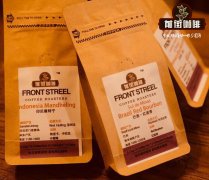
How to brew moderately roasted Brazilian coffee beans in Brazil, the world's largest coffee producer?
Brazil is the world's major producer and exporter of coffee beans, coffee beans taste mellow, is a typical deep-roasted coffee beans. About 1/3 of the world's coffee comes from Brazil, and most of the premium coffee in Brazil is labeled Santos after passing through the port. Altitude range: 400-1600 m above sea level harvest season: may-September annual coffee output: 4000-60 million bags

The History of Guatemalan Coffee
Guatemalan coffee (Guatemala Coffee), Guatemala coffee beans. Guatemalan coffee is produced in the The Republic of Guatemala countries of northwestern Central America. The mountain forest area of the country accounts for 2/3 of the country's area, and it is rich in high-quality coffee beans. Guatemalan coffee beans belong to bourbon coffee beans, which are sour, mellow and slightly wild.

The flavor of Costa Rican coffee with pleasant aroma. Introduction to the characteristics of fine coffee beans in the manor area.
Costa Rica accounts for only 0.03% of the world's land area, but with nearly 4% of the world's species, Costa Rica is one of the countries with the richest biological species in the world. 26% of the land area is a national park or nature reserve, including 11 wetlands, 2 biological reserves and 3 World Natural Heritage sites. The national forest coverage rate is 52%. Natural resources include iron, manganese, mercury, bauxite,

The first World Coffee producers Forum developed a road map to address common challenges
For professional baristas, follow Coffee Workshop (Wechat cafe_style) Medellin, Colombia, July 15, 2017 (GLOBE NEWSWIRE)-the first World Coffee producers Forum, which brings together representatives of the entire coffee value chain, concluded on Wednesday, with a final statement outlining a plan of action to address common challenges and other specific measures. The action

Costa Rican coffee bean evaluation: how to make the blue label of rose summer coffee in Costa Rican Goddess Manor?
Professional coffee knowledge exchange more coffee bean information please follow the coffee workshop (Wechat official account cafe_style) Costa Rica multi-tower coffee producing area goddess manor washing rose summer information on the goddess manor organic cultivation of coffee, the use of local native trees and fruit trees as coffee shade, the use of fertilizer is also coffee cherry pulp mixed with molasses, added to the nearby mountain minerals

A brief introduction to the origin, development, history and culture of Antigua boutique coffee beans
Now that we are talking about the Vivette South Fruit producing area, we have to introduce the star manor El Injerto, whose name comes from the unique fruit name of the Vivette Nanguo region. There are quite a variety of coffee trees in the manor. Here, Bourbon, Pacamara, Marago Gippe and other varieties are planted. It has a history of COE competitions in Guatemala.

Flavor and taste characteristics of coffee manor in Guatemala introduction of Antigua boutique coffee beans
Between 1950 and 1954, the ruling president Jacobo Abens implemented land reform, when big landlords, who accounted for 2 per cent of the country's population, owned about 70 per cent of the country's arable land. Arbens wrote a check for land reform, promising to buy the land held by the big landlords and redistribute it to small farmers. Arbens won the election, and the land reform plan was carried out immediately. For owning land greater than 223
The origin of fine coffee, Guatemalan coffee.
Guatemalan coffee is produced in the The Republic of Guatemala countries of northwestern Central America. The country's mountain forest area accounts for 2/3 of the country's area and is rich in high-quality coffee beans. Guatemalan coffee beans belong to bourbon coffee beans, which have a strong sour taste, mellow taste and slightly wild taste, and can be used as a single drink or for the preparation of comprehensive coffee. A cup of Guatemala

An introduction to the characteristics of the coffee flavor and taste area of the Caesar Louis Manor in Panama, which has a very long-lasting tail rhyme.
Panama is located in the isthmus of Panama in Central America, bordered by Colombia to the east, the Pacific Ocean to the south, the map of Panama to Costa Rica to the west and the Caribbean Sea to the north. The territory is S-shaped to connect North and South America, and the Panama Canal connects the Atlantic and Pacific oceans from north to south. It is known as the bridge of the world. [5] Panama has a land area of 75517 square kilometers.

An introduction to the characteristics of fine coffee in the manor area with a good sour taste of Guatemalan coffee
Between 1950 and 1954, the ruling president Jacobo Abens implemented land reform, when big landlords, who accounted for 2 per cent of the country's population, owned about 70 per cent of the country's arable land. Arbens wrote a check for land reform, promising to buy the land held by the big landlords and redistribute it to small farmers. Arbens won the election, and the land reform plan was carried out immediately. For owning land greater than 223